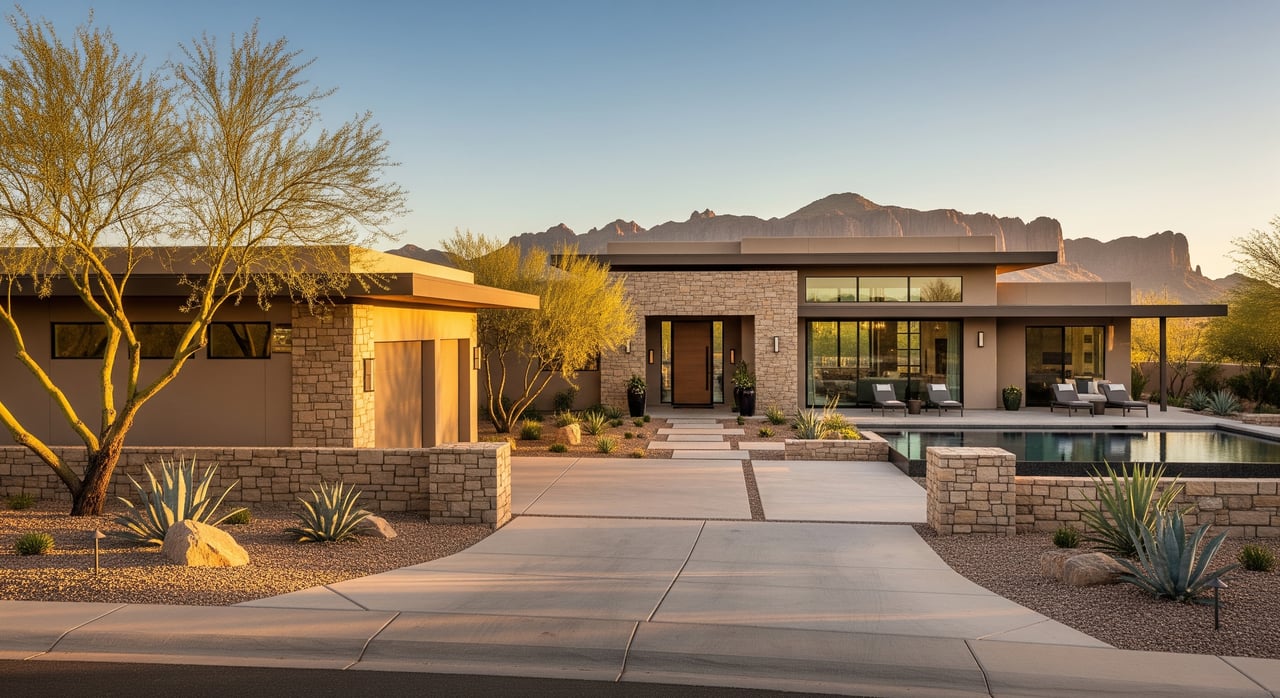
Picture your morning starting with soft desert light on the Superstition Mountains, a quick coffee, and a short drive to errands before the heat sets in. If you are looking at newer homes in East Mesa, Blossom Rock puts you near mountain views and Sonoran Desert open space with the convenience of a master-planned layout. You want to know what living here actually feels like day to day. In this guide, you will learn how commutes, schools, shopping, utilities, HOAs, and outdoor life come together in Blossom Rock so you can make a confident move. Let’s dive in.
Blossom Rock at a glance
Blossom Rock is a newer, master-planned community in eastern Mesa near the Superstition Mountains. You can expect a cohesive streetscape, model-home offerings from builders, and shared amenities like parks, trails, and likely a community pool or splash pad. Homes typically feature stucco exteriors, desert-adapted landscaping, and floorplans designed for indoor-outdoor living. Mountain views and quick access to Sonoran Desert recreation are part of the appeal, so it helps to confirm sightlines from the exact lot you are considering.
Master-planned neighborhoods usually include an HOA that maintains common areas and sets design standards. Ask for current HOA dues, what those dues cover, and the community’s rules for landscaping, exterior changes, and short-term rentals. If the neighborhood is still building out, the HOA may be under developer control with a planned transition to homeowners as build-out advances.
Desert climate and seasons
Mesa sits in the Sonoran Desert, which means very hot, dry summers and mild winters. Outdoor life shifts to mornings and evenings in the summer, with residents planning hikes, runs, and dog walks early or later in the day. Mid to late summer also brings monsoon season, when sudden storms, dust, and brief surface water can roll in quickly.
Plan for seasonal realities. You will likely manage higher cooling bills in summer, so ask builders about energy-efficient HVAC systems, insulation, and window packages. Landscaping is often desert-friendly with drip irrigation. During monsoon season, know your lot’s drainage plan and be mindful of dust storm safety.
Daily-life essentials
Schools and childcare
School assignment for new subdivisions depends on district boundaries. East Mesa is primarily served by Mesa Public Schools, but specific parcels can fall into nearby districts. Charter and private options are also common across the East Valley. To understand your day-to-day routine, confirm the assigned elementary, middle, and high schools, bus service, and before or after-school care.
When you get serious about a specific home, verify boundaries with the district’s map and review official report cards from the Arizona Department of Education. Drive the route during school drop-off to get a feel for timing and traffic. If you plan to open enroll, ask about current availability and waitlists.
Healthcare and emergency care
You will find major regional hospitals within a short drive, including Banner facilities that serve East Mesa and adjacent cities. Urgent care clinics are common near newer shopping centers and arterial roads. For emergency services, confirm that Mesa Police Department and Mesa Fire & Medical Department cover your address. Response jurisdictions can depend on annexation, so it is worth verifying for each parcel.
Groceries and everyday shopping
Most daily errands are within a 5 to 15 minute drive in East Mesa, with national-chain grocery stores and retail conveniently located near major arterials. Larger shopping centers and big-box options are typically 10 to 20 minutes away. For specialty dining and broader nightlife, many residents head toward central Mesa or neighboring Gilbert within a 15 to 35 minute drive.
To fine-tune your routine, map out your most frequent stops. Try two different routes to a preferred grocery store during late afternoon and weekend hours. If you work from home, check for nearby coffee shops or co-working spaces to mix up your day.
Transit and commutes
Most residents drive. US-60 (Superstition Freeway) is the main east-west route across the metro, and Loop 202 (Red Mountain Freeway) provides additional East Valley access depending on your exact location. Public transit offers limited fixed-route coverage in far-east residential areas. Light rail currently serves central Mesa but does not reach most new communities on the eastern edge.
Typical commute times vary by destination and time of day. Expect a wide range, from roughly 20 minutes to parts of Mesa to 60 minutes or more for some Phoenix or Scottsdale destinations during peak rush. If commute time matters to you, test your drive on a weekday at your normal departure time.
Utilities and internet
Electric service is commonly provided by SRP or APS depending on the parcel. Most annexed developments receive City of Mesa water and sewer service, while some master-planned communities use private water companies by agreement. Southwest Gas is the main natural gas utility in the region.
Internet options typically include Cox Communications or Lumen (CenturyLink) for wired service. Fixed wireless or satellite can supplement areas with limited wired availability. Confirm service speeds and installation timelines before closing so you can plan your move-in smoothly.
Safety and crime
Crime patterns can vary by block and over time. New master-planned neighborhoods often report lower property-crime levels early on, though there are no guarantees. Many buyers review the Mesa Police Department’s crime maps and the FBI Crime Data Explorer and speak with neighbors or local groups to understand on-the-ground sentiment. Good exterior lighting, garage habits, and any HOA safety programs can support a consistent sense of comfort.
Homes and how buying works
New construction process
Builders in master-planned communities usually offer a menu of base floorplans with structural options and interior finish packages. Lot premiums often apply for larger yards, corner lots, or view corridors. Pricing can change with demand, incentives, and release phases.
You can negotiate. While not every builder adjusts base price, you may secure closing cost credits, design-center upgrades, or a favorable lot premium depending on market conditions. Ask about timelines for build stages and how weather or supply chain factors may affect your completion date.
Warranties and inspections
New homes typically include builder warranties. Many builders provide one year of workmanship coverage, two to five years for systems, and a structural warranty. Request warranty documents before signing and understand how to file claims. Even with a new home, consider third-party inspections at key milestones and a comprehensive inspection before the final walkthrough.
HOA and ongoing costs
Expect an HOA with monthly or quarterly dues. Ask what is included, such as community pools, parks, trail maintenance, and perimeter landscaping. Review the CC&Rs and design guidelines for rules on paint colors, landscaping, fencing, and any short-term rental restrictions. If the HOA is developer-controlled, request the transition plan and any reserve studies or budget summaries.
Understanding the HOA upfront helps you avoid surprises. If you want a particular backyard design or plan to install solar, confirm the approval process and timelines.
Taxes, insurance, and utilities
Property taxes are assessed by Maricopa County. Brand-new homes can see assessed values adjust in the first year as the county updates records. For insurance, new construction can offer some cost advantages, though premiums vary by value and coverage. Flood risk is generally low in most East Mesa yards, but desert storm runoff and local topography matter, so review FEMA maps and the developer’s drainage plan for your lot.
Cooling costs are a real line item in summer. Ask builders about energy certifications, insulation levels, window U-values, and HVAC efficiency ratings. Simple daily habits, like closing shades in the afternoon and using ceiling fans, help manage indoor comfort.
Resale and value drivers
Long-term value in master-planned communities often comes from location within the metro, school assignments, HOA reputation, builder quality, and the specific lot. Mountain views, larger lots, and convenient access to major arterials tend to be strong value drivers. Walkable proximity to parks or a future retail pad can also boost daily enjoyment and appeal when you resell.
If you are choosing between two lots, stand on each one near sunset to compare view corridors and noise. A small shift in orientation can change how your backyard feels year-round.
Recreation and community life
Trails and outdoor access
East Mesa is a gateway to the Superstition Mountains and Sonoran Desert trails. Many residents make early morning hikes, birdwatching, or mountain bike rides part of their weekly routine. Check City of Mesa, county, and state park resources for nearby trailheads, multi-use paths, and any equestrian access.
If you love sunrise or sunset views, scout for open saguaro-studded areas with clear mountain sightlines. When temps climb, shift to short evening walks and bring water for you and your pets.
Parks, pools, and amenities
Master-planned communities typically feature a central park, play areas, walking paths, and a pool or splash pad. These become natural gathering spots for dog walks, after-school play, and weekend meetups. The HOA or community association often hosts seasonal events, which help new neighbors connect as the community grows.
Shopping, dining, and weekend rhythms
A typical weekend might include a grocery run, coffee stop, and a short drive to a larger retail center for big errands. For wider dining options and arts events, many residents head to central Mesa or nearby cities for farmers markets, performances, and restaurants. Plan your errands for mornings in summer to beat the heat, then relax at the pool or take a sunset stroll.
Community feel over time
Mesa is a large and diverse city that includes families, retirees, and commuting professionals. New master-planned communities often draw buyers who want new construction, community amenities, and low-maintenance landscaping. Neighborhood identity forms over the first few years as trees mature, amenities open, and resident groups organize events and clubs.
Your on-the-ground checklist
Use this checklist to evaluate everyday life in Blossom Rock and keep your research focused:
- Confirm exact subdivision boundaries, lot map, and amenity sites with the developer and the City of Mesa planning maps.
- Ask for the official amenity list and construction timelines for parks, pool, and trails. Label anything “planned” until you see approvals or completed build-out.
- Request HOA dues, CC&Rs, meeting minutes if available, and the developer-to-homeowner transition plan.
- Verify school boundaries with the district and review official report cards. If open enrollment or charter is your plan, ask about current capacity.
- Check utilities for your specific lot: electric provider (SRP or APS), water and sewer service, Southwest Gas, and internet options with speed tiers.
- Confirm police and fire service for the parcel based on annexation and city coverage.
- Review FEMA flood maps and the developer grading plan for drainage. Ask about any recorded easements.
- Test commute times at your expected hours using two routes to your primary destination.
- Visit at different times (weekday morning and weekend afternoon) to gauge traffic, parking, and community activity.
- Walk the route to parks, mailboxes, and any nearby retail to see what daily routines feel like on foot.
Ready to explore Blossom Rock?
If Blossom Rock fits your vision of desert living with modern convenience, you do not have to navigate the process alone. Our team helps you compare floorplans and lots, negotiate builder incentives, and manage every step through closing with remote-friendly workflows if you are relocating. We coordinate inspections, warranty reviews, and utility setup so your move feels seamless.
When you are ready, connect with our local experts at Avenue 4319. If you are a current homeowner planning a sale, start with our concierge listing strategy and professional presentation. Get Your Free Home Valuation to see your options.
FAQs
What is the typical commute from Blossom Rock to Phoenix or Scottsdale?
- Most residents drive using US-60 or Loop 202. Depending on destination and time of day, expect roughly 20 to 60 minutes. Test your route at your usual departure time for the most accurate result.
Which schools serve Blossom Rock and how do I confirm?
- East Mesa is primarily served by Mesa Public Schools, though boundaries can vary by parcel. Confirm assigned schools with the district’s boundary map and review official report cards before you decide.
Does Blossom Rock have an HOA and what does it cover?
- Master-planned communities almost always have an HOA. Ask for current dues, included amenities like parks and pools, design guidelines, short-term rental rules, and the developer-to-homeowner transition timeline.
Which utilities and internet providers serve new homes in East Mesa?
- Electric is typically SRP or APS depending on the lot. Water and sewer are often provided by the City of Mesa, with Southwest Gas for natural gas. Internet options commonly include Cox or Lumen, with fixed wireless or satellite as alternatives.
How hot are summers in Mesa and how do residents adapt?
- Summers are very hot and dry with a monsoon season in mid to late summer. Residents plan outdoor time for mornings and evenings, prepare for higher cooling bills, and stay aware of dust storms and brief surface water during storms.